



You tailor the training. Not the athlete.
Load, recovery, nutrition and technique are all built around the individual athlete. But how a player thinks, what energizes them and how they take feedback is usually left to guesswork. CliftonStrengths puts that layer in writing.
We do not do sports from behind a desk. We do it with Mirnix.
The sports program is built together with the hockey brand Mirnix. Fortal brings certified work with CliftonStrengths, Mirnix knows the locker room, the training floor and sports logistics from the inside. Together we call it Gamechanging Talents.
Fortal
Michael Koch
Founder, Gallup Certified Strengths Coach
More than 800 hours of coaching, both individual and team. He has trained dozens of coaches who work with the Gallup methodology across Czechia and Slovakia today.
Mirnix
Matěj Raiter
Co-founder of Mirnix
Raised at HC Lev Hradec Králové, founder and long-time captain of the men's squad at FbC Hradec Králové, top-league defender for TJ Sokol Královské Vinohrady. He connects people who want to build a healthy sports environment.
mirnixhockey.comSound familiar?
This is not a question of effort. Every locker room has plenty of effort. It is a question of how development gets divided between specific people.
Answer the questions below honestly and the pattern usually shows up: the team does not have a commitment problem. It has a problem with everyone getting the exact same thing.
The right people, in the right places, led the right way. That is the whole sentence.
Ask yourself:
Every athlete reads the game differently.
CliftonStrengths measures 34 talents. Each card below is a specific pair out of those 34 and a description of how that pair shows up on the field and in the locker room. Click a talent name to open its full profile.
Domain: Strategic Thinking
Reads the game and the opponent
Sees patterns, anticipates how a game unfolds and knows what the next move will be. Needs to understand the why, not just receive the instruction.
Talents behind it
How to spot it
During video review asks for the reason, not the instruction. Looks up how the opponent plays before the game, unprompted.
Domain: Influencing
Lifts the energy of the team
Holds the mood, connects people and gets others going through sheer commitment. Most valuable in the locker room after a loss.
Talents behind it
How to spot it
Lifts heads after a goal against. Is the first to talk to a newcomer in the locker room.
Domain: Executing
Brings stability and process
Keeps the regimen, the routine and fair rules even under pressure. Cannot stand last-minute improvisation.
Talents behind it
How to spot it
Has a pre-game routine timed to the minute. Says out loud when the rules only apply to some people.
Domain: Relationship Building
Holds the locker room and young players
Builds deep bonds and sees progress where others only see a mistake. A new player settles in fastest around this one.
Talents behind it
How to spot it
Stays after practice with whoever is struggling. Knows teammates' personal situations, not just their stats.
Domain: Influencing
Wins through sheer intensity
Chases the result and hates losing even in practice. This pair makes an important point: talents do not combine by domain, they combine in specific people. Which is why looking for one universal winner profile makes no sense.
Talents behind it
How to spot it
Plays the warm-up for the result. Keeps his own count of where he finished.
You cannot rewrite what comes naturally. You can suppress it, which burns a lot of energy. Or you can develop it, and that energy goes into performance.
What talents do athletes and coaches have?
A peer-reviewed study compared the talent profiles of athletes and their coaches. Every name links to its profile.
Athletes. Top 5
Coaches. Top 5
Worth noticing
Restorative® leads among athletes.
Solving problems and getting back into the game after a loss or an injury. Exactly what separates the players who get back up from the ones who walk away.
Across sports. The study sample is 59.8 % softball and 87.7 % women, so among male athletes Competition® leads in this sample. What comes naturally differs by sport and by gender, which is precisely why we build development around the individual rather than around an average.
Low talents are not a weakness. They are the logic of sport.
The study states the low placement of Input® and Responsibility® and offers practical recommendations for coaches. The explanation of why is a likely reading consistent with the literature, not a proven cause.
Input®
Low among athletes and coaches alike
Input® means collecting and digesting information, and that takes time. Sport is fast and time-compressed. It rewards quick application and adaptation more than long data gathering.
A coach high in Input® should highlight the key takeaways instead of drowning players in data. An athlete low in Input® needs short, actionable instructions.
Responsibility®
Low mainly among athletes, fifth among coaches
Responsibility® is a strong commitment to deliver what was promised. But sport carries high outcome uncertainty. A player can give everything and still not guarantee a win, because the opponent, form and injuries all have a say. Committing to something you do not fully control is mentally costly.
Reframe commitments around what the player actually controls instead of an uncertain result. Among coaches, Responsibility® ranks higher for a logical reason: their role carries accountability for preparation and leadership.
Practical recommendations: the same study, Applied Implications section.
The test is not the finish. Training starts there.
Getting your results and thinking you are done is like measuring VO2 max once and expecting form to last the whole season.
The Gallup strengths development principle: Name it, Claim it, Aim it.


From rock bottom to state champions.
The Cranbrook-Kingswood hockey team was full of talent and did not work. Zero chemistry, no respect for the staff, players fighting each other more than the opponent.
Over six weeks every one of them went through CliftonStrengths, including the players everyone forgot about on the bench. Talents were tied to specific roles and the team wrote its own commitment to unselfish play, discipline and respect. They finished as state champions.
This is one specific story, not general proof. But it shows what happens when confidence and roles inside a team fall into place.
Source: Maureen Electa Monte, Destination Unstoppable (2016).
The season after the intervention
What working with talents does.
These are not percentages borrowed from corporate life. These are the effects the research literature describes in sport.
Higher player engagement
Working with strengths is associated with higher athlete engagement. A player knows better where their natural energy sits and how to use it in practice and in the game.
Better chemistry in the locker room
A shared language of talents helps players and coaches understand the differences on a roster, improve communication and strengthen cohesion.
Better handling of mistakes
Athletes score high on Restorative®, an orientation toward the problem, the fix and the improvement. Practice then runs as what exactly are we solving and how do we make it better.
Sharper roles for players and coaches
A talent profile helps set who naturally drives performance, who holds relationships, who solves problems and who plans. The study itself points out that excellence in sport is not tied to one universal profile.
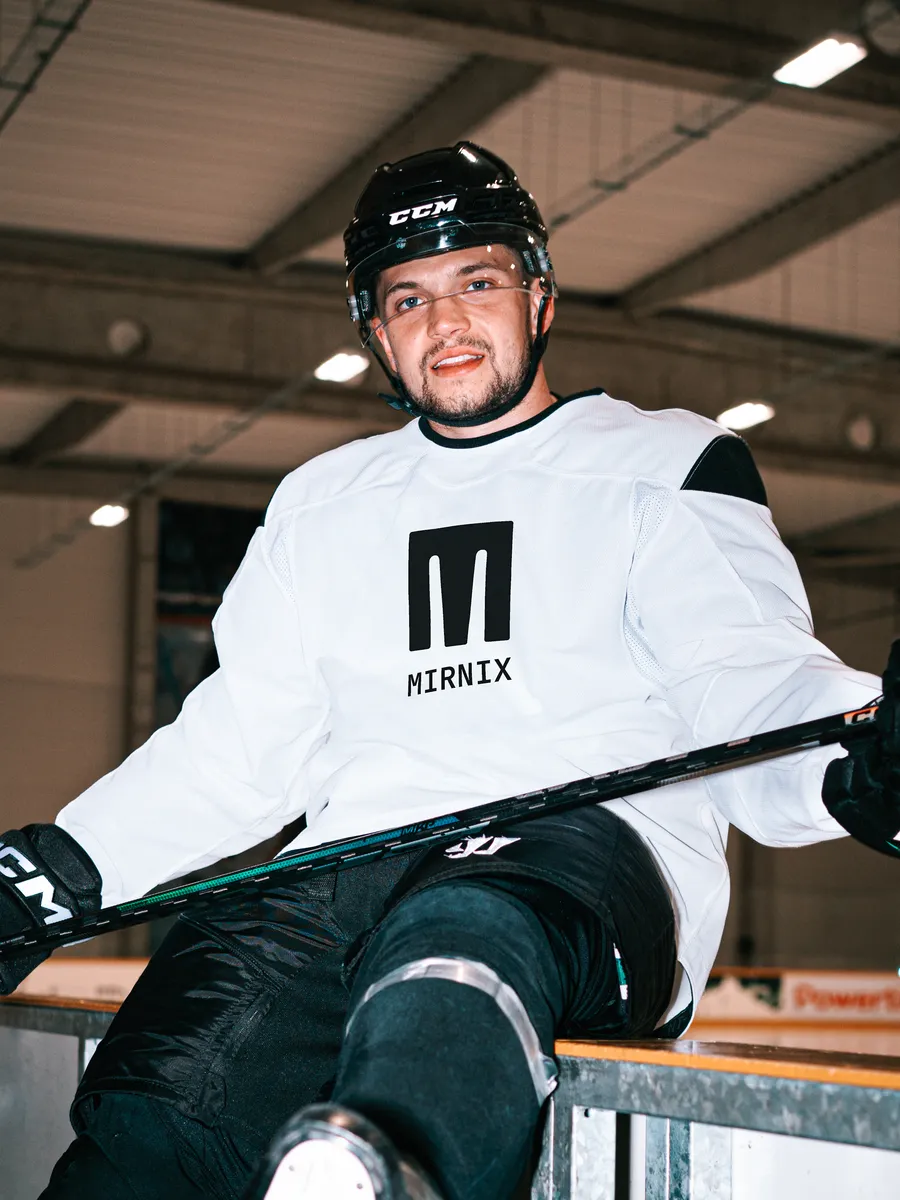
A player who went through it.
More client references„All of a sudden I believed something I had only sensed about myself for years. Seeing my talents in writing made it click why I think, decide and operate the way I do.“
„Then my mentor and I broke it down, and I started building on what comes naturally to me. That was the biggest relief of all.“
From one player to the whole team.
The benefit starts with the individual, grows through small groups and ends with the full roster and the support staff.
Coach and player
How the coach leads versus what the player needs to hear in order to grow.
Support staff
Head coach, assistants and strength staff. Where they complement each other and where they step on each other's toes.
Captain and team
How a captain pulls the team along without losing himself in the process.
Two players in conflict
An objective basis for understanding the differences, without it getting personal.
Send us the roster. We take care of the rest.
You send names and emails. We handle invitations, the assessment, the reports and scheduling the mentoring.
Core package
Assessment, written report and mentoring
Optional next steps
Team talents do not have to end up in a PDF. In the Fortal Zone coaches and players have them live on their phones, and the grid updates with every new player.
What coaches ask most often
Does CliftonStrengths work in sport when it was built for the workplace?
Yes. The method does not measure performance or skill, it measures natural patterns of thinking, feeling and behaving. Those do not change when someone puts on a jersey. CliftonStrengths is also studied in sport in its own right, from NCAA programs to professional teams.
From what age does the assessment make sense for athletes?
The full CliftonStrengths, which measures all 34 talents, is designed for ages 14 and up. With younger players it pays to wait, because talent patterns are still settling at that age.
How much time does it take from the players?
The assessment takes 30 to 45 minutes and is completed once in a lifetime. Individual mentoring is a single session. Everything after that happens in practice, not in more meetings.
Does the whole team have to go through it, or is a few people enough?
You can start with an individual: a coach, a captain, or a player currently searching for form. The team grid and the workshop make sense once a larger part of the locker room knows their talents, otherwise there is nothing to compare.
Is this a personality test like MBTI?
No. CliftonStrengths does not sort people into types. It returns an individual ranking of 34 talents that is practically unique. In the top five alone there are more than 33 million combinations, so players do not get a label, they get their own description.
Do we get the results in our own language?
Yes. The assessment can be completed in English, Czech, Slovak and more than 30 other languages, and every player gets a personalized 26-page report from us.
Sources
Every claim on this page has a traceable source. The links lead to the original.
- Talent profiles of athletes and coaches, N = 1,516: Robles, Owens, Nguyen-Feng and Dauphinee (2025). CliftonStrengths in sports. Journal of Happiness and Health, 6(1), 10 to 24.
- Athlete engagement: Stander et al. (2017). A strength-based approach to athlete engagement. South African Journal for Research in Sport, 39(1), 165 to 175.
- Coaches at NCAA level: Robles (2020). CliftonStrengths in collegiate sport. Applied Research in Coaching and Athletics Annual, 35.
- The Cranbrook-Kingswood story: Maureen Electa Monte, Destination Unstoppable (2016).